Exploring Australia by
Campervan vs. Car with a Tent vs. Car
Australia is one of the world’s greatest road trip destinations. From the tropical rainforests of Queensland and the rugged, white coastline of Western Australia to the red deserts of the Northern Territory and the mountain scenery of Tasmania, the country seems almost designed for independent travel. The things you can see and experience are incomparable to the rest of the world.
When planning an Australian adventure, one of the biggest decisions you’ll face is how to explore it.
Should you rent a campervan?
Would a standard rental car and accommodation be a better choice?
Or should you combine a rental car with camping equipment and a tent?
Should you use public transportation instead?
Unlike many destinations where one travel style clearly stands above the rest, Australia offers genuine advantages for all three (doable) options. There is no wrong answer – the challenge is choosing the option that suits your trip best. The right choice depends on your budget, comfort expectations, travel duration, destinations and personal travel style.
In this guide, we’ll compare campervan travel, car camping and traditional car travel to help you decide which option is right for you.
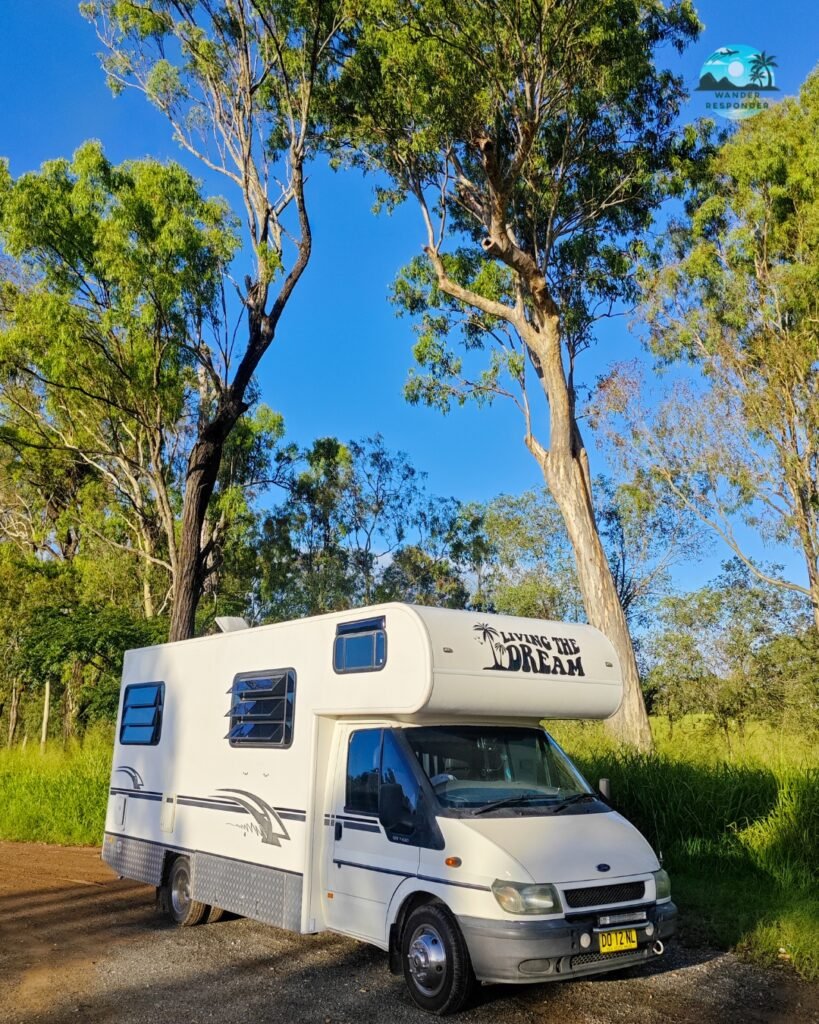
Table of Contents
- Exploring Australia by Campervan
- What is a Campervan?
- The Freedom of the Open Road
- Understanding Free Camping in Australia
- National Park Campgrounds
- Caravan Parks
- Must-Ask Questions When Renting a Campervan
- Advantages of Campervan Travel
- Disadvantages of Campervan Travel
- Exploring Australia by Car with a Tent
- Camping Culture in Australia
- Advantages of Car + Tent Travel
- Disadvantages of Car + Tent Travel
- So, Is Car + Tent Travel Worth It?
- Exploring Australia by Car
- Comfort and Convenience
- Accommodation Costs
- Dining and Food Expenses
- Vehicle Size and Ease of Driving
- What About Public Transportation?
- The Reality of Australian Distances
- Personal confession
- Campervan vs. Car with a Tent vs. Car: Which Should You Choose?
- What Would We Personally Choose?
Exploring Australia by Campervan
If you’ve spent any time researching Australia road trips, you’ve probably seen countless photos of campervans parked beside beaches, in national parks or overlooking spectacular coastal scenery.
There is a reason for that.
Australia and campervan wandering are a fantastic combination.
The country’s enormous size, extensive camping infrastructure and abundance of natural attractions make it one of the best places in the world to explore on wheels.
For many wanderers, campervan travel represents freedom in its purest form. You are not tied to hotel reservations; you don’t need to reach a particular town by evening. If you discover a beautiful national park, a remote beach or a scenic campground that wasn’t part of your original plan, you often have the flexibility to stay longer.
This flexibility becomes particularly valuable in Australia, where distances are huge and some of the best experiences happen away from major tourist centres.
However, campervan travel is not perfect. Many first-time visitors assume that campervans automatically save money and provide the ultimate travel experience. Sometimes that’s true. Sometimes it isn’t. Before making a decision, it’s important to understand exactly what campervan travel involves.
What is a Campervan?
A campervan is a specially designed vehicle equipped for overnight travel. Depending on its size and configuration, it may include:
- Comfortable beds or convertible sleeping areas
- A kitchenette with a sink and gas stove
- Refrigerator and freezer
- Interior lighting
- Electricity supplied by a leisure battery
- Power outlets and USB charging ports for electronic devices
- Water storage tanks
- Dining area or seating space
- Portable or fixed toilet
Larger campervans and motorhomes may also include indoor shower and permanent toilet, hot water system, larger kitchen facilities and more storage space.
The distinction between campervans and motorhomes is often based on size. Smaller campervans are generally built on van platforms and are easier to drive, while larger motorhomes offer additional living space and facilities but require more confidence behind the wheel.
Before booking, think carefully about how much time you’ll actually spend inside the vehicle.
A couple travelling around Australia for three months will probably appreciate additional space far more than somebody completing a two-week East Coast road trip.
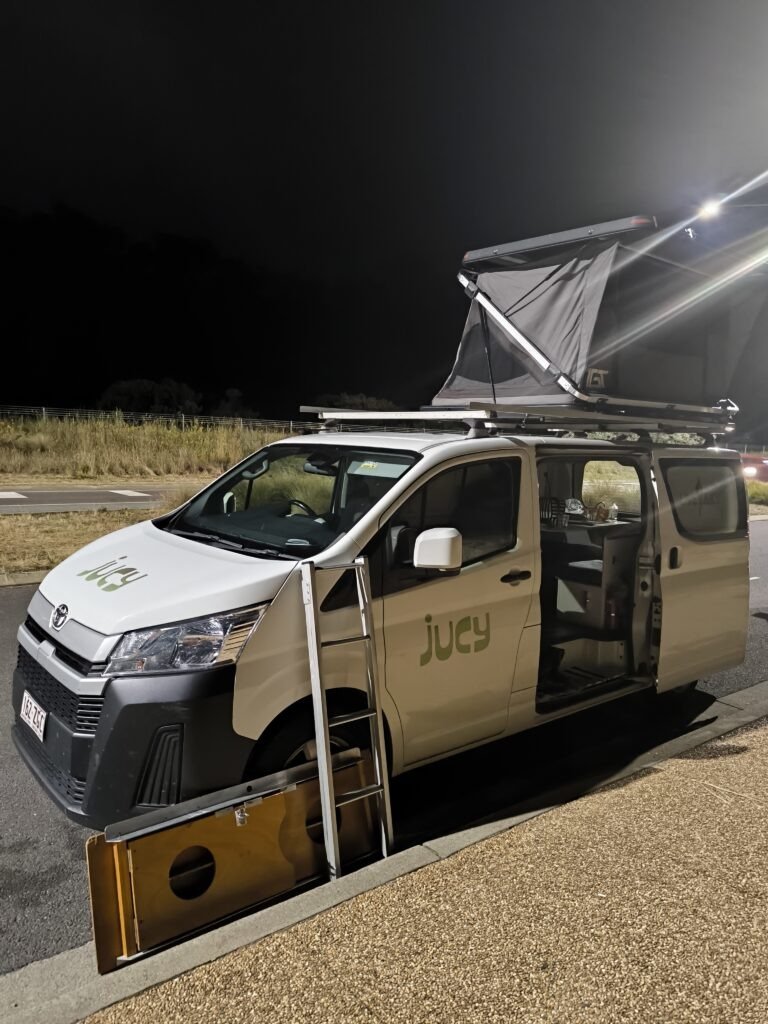
Best campervan rentals: Travellers Autobarn and Jucy
Best motorhome rentals: StarRV
Best of both worlds (sleeper car): Spaceships
The Freedom of the Open Road
One of the greatest advantages of wandering by campervan is flexibility. You are not tied to hotel reservations or strict schedules. Say, you’re driving along the Queensland coast and discover a beautiful beachfront campground you had never heard of, or you’re exploring Tasmania and decide you want to spend an extra day hiking in a national park. With hotels and fixed accommodation, changing plans can become expensive, complicated or you end up disappointed – or worse, you experience FOMO.
With a campervan, it’s often as simple as deciding to stay. The level of freedom is difficult to replicate when travelling by car and staying in hotels.
Personal note: This is where vanlife really shines. Some of our favourite wandering memories have come from places we never planned to visit. The ability to change your itinerary without worrying about accommodation can completely transform a road trip. Australia rewards curiosity and a campervan makes it easier to follow it. 😊
Understanding Free Camping in Australia
One of the most common assumptions about campervan travel is that you’ll save enormous amounts of money through free camping, because you don’t pay for expensive hotel stays. The reality is slightly more complicated.
Yes, Australia has an impressive network of free and low-cost camping options. However, you cannot simply park anywhere and spend the night. Free camping opportunities vary between states, councils and regions. Some locations actively encourage travellers, while others have strict restrictions on overnight parking – and ignoring rules will get you problems.
Depending on where you’re travelling, free camping may include:
- Rest areas
- Council-operated campgrounds
- Designated free camps
- Remote bush camps
- Showgrounds
For many vanlifers, apps such as WikiCamps or CamperMate are lifesavers. Both apps are great, but WikiCamps is better for Australia.
NOTE! If you’re interested in wandering around New Zealand too you’ll see that CamperMate is better app to use there.
Nevertheless, we often checked both apps since not both have same spots in their maps. The apps include legal camping areas, water refill points, dump stations and other facilities, such as showers, laundry etc.
The hidden question many travellers ask is: “Can I realistically save money with a campervan?”
The answer is yes. But not always as much as people expect.
Many wanderers still spend a significant number of nights in paid campgrounds or caravan parks for access to showers, electricity, laundry facilities and convenience. We cover more about this in blogpost “Must-ask questions before renting a campervan”.
National Park Campgrounds
One of the greatest advantages of campervan travel in Australia is access to national park campgrounds. Some of the most spectacular camping experiences are located inside national parks.
Imagine waking up beside the beach in Queensland or beneath towering eucalyptus forests in Victoria, or near dramatic coastal cliffs in Western Australia or surrounded by Outback scenery in the Northern Territory.
National Park campgrounds often place you much closer to nature than traditional accommodation.
What you get in those campgrounds varies a lot. From a toilet and a firepit to hot showers, drinking water, BBQ facilities, visitor centres and powered sites.
In our opinion, some of the best overnight experiences in Australia happen in national park campgrounds rather than hotels.
Caravan Parks
Sooner or later most wanderers discover the value of caravan parks. When you’re on the road for several days, you’re delighted when you get a hot shower, (sometimes free) laundry facilities, electricity (that doesn’t depend on sunny weather), camp kitchens (with unlimited gas) and free Wi-Fi.
Caravan parks are very common throughout Australia. They range from simple facilities to holiday parks with swimming pools, playgrounds and excellent amenities. The prices range too.
Many experienced wanderers alternate between free camps, national park campgrounds and caravan parks depending on what you need at that moment.
Must-Ask Questions When Renting a Campervan
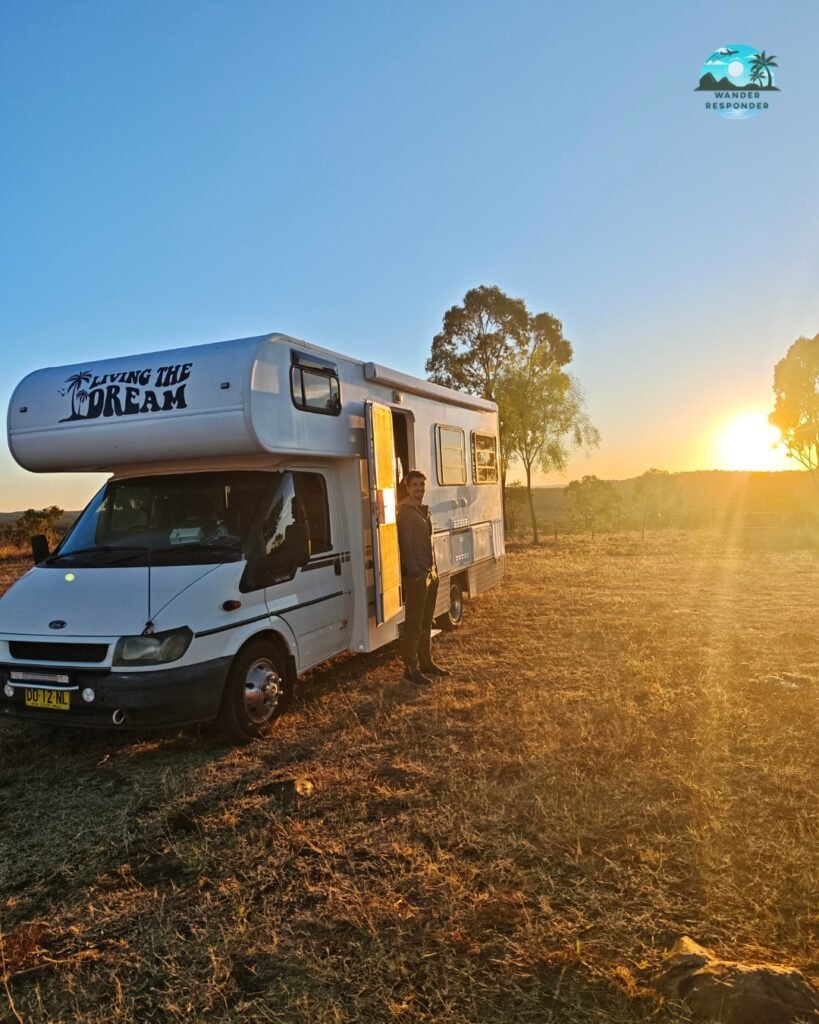
Before driving away in your campervan, make sure you understand how the vehicle’s essential systems work.
Ask the rental company: How many nights can we typically stay off-grid before needing to connect to a powered site? Battery life varies significantly between vehicles and depends on your use of lights, the refrigerator, device charging, heating, and other electrical equipment.
You should also ask about the freshwater tank, which stores clean water for drinking, cooking, washing dishes, and sometimes showering. Most campervans carry between 40 and 120 litres of fresh water, while larger motorhomes may hold considerably more. Fresh water can be refilled at holiday parks, many campgrounds, public refill stations, and locations shown in apps such as WikiCamps.
It is equally important to understand the wastewater (grey water) tank, which collects used water from sinks and showers. These tanks are often similar in size to the freshwater tank and must be emptied regularly. Ask where and how to dispose of wastewater, as it must only be emptied at designated dump stations, which are widely available throughout Australia and can also be found using WikiCamps and similar apps.
Read this blogpost about must-ask questions when renting a campervan in Australia.
Advantages of Campervan Travel
Campervan travel may be a great choice if you value flexibility, spontaneous travel, national park exploration, long-term road trips, cooking your own meals, reduced dependence on accommodation bookings and unique travel experiences.
Disadvantages of Campervan Travel
Vanlife is not automatically the perfect solution. Sometimes rental costs are higher, you definitely have increased fuel consumption and more difficulties parking. Campervans are larger vehicles to drive with limited living space. You’ll need to manage water systems, power systems and waste disposal.
Social media often presents campervan travel as effortless. The reality occasionally includes searching for dump stations, emptying and cleaning toilet cassette, monitoring battery levels, refilling water tanks and navigating large vehicles through busy city streets. But none of these are major problems.
So, if a campervan isn’t the perfect solution, could a rental car and tent offer a better balance between freedom, simplicity and cost?
Exploring Australia by Car with a Tent
Many international visitors automatically compare campervans with hotels. Australians often compare campervans with tents. That’s because camping is deeply embedded in Australian travel culture.
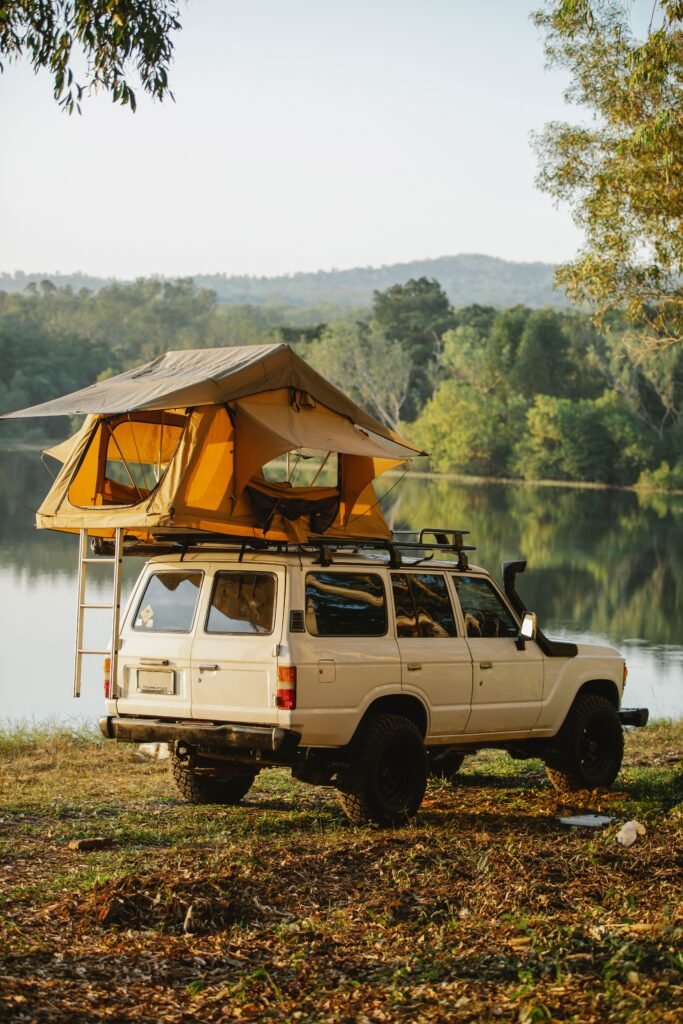
On any long weekend, school holiday or national park visit, you’ll find thousands of Australians travelling with tents, swags, rooftop tents and simple camping setups. And after spending time exploring the country, it’s easy to understand why.
Australia offers an incredible network of campgrounds, national parks, free camps and remote camping opportunities that make tent travel a genuinely attractive alternative to campervans.
The hidden question remains: Is travelling with a tent simply a budget compromise, or is it a legitimate travel style in its own right?
In our opinion, it’s absolutely a legitimate option. In some situations, it may even be the best option.
Camping Culture in Australia
Australia has one of the strongest camping cultures in the world. Families camp, retirees camp, 4WD enthusiasts camp. Even backpackers camp! And even travellers who could easily afford hotels often choose to spend nights in campgrounds in their campervans or trailers because they enjoy the experience.
Camping is often viewed as part of the adventure rather than a sacrifice. You can easily notice that in national parks, coastal destinations, Outback, Tasmania, Queensland and Western Australia.
Most places that allow free campervan parking overnight allow tents also, but not all (like road-stops don’t even have a designated area, it’s just gravel).
Advantages of Car + Tent Travel
Advantages of Car + Tent Travel
Lower Costs: If you’re on a budget, this is probably the biggest advantage. Compared with campervans, you’ll usually spend less on vehicle rental, fuel and campground fees. Compared with hotels, you’ll often spend dramatically less on accommodation. So, you can save a lot on a longer trip.
Easier Driving: standard car is easier to drive than a campervan. Easier parking (you can practically park anywhere), greater manoeuvrability and less stress in cities. This becomes particularly noticeable when driving through places such as Sydney, Melbourne, Brisbane or Perth.
Access to More Locations: people assume campervans automatically provide greater freedom, but that’s not always true. Some gravel roads, scenic routes and remote areas are easier to access with a standard vehicle. Not to mention beaches. A smaller vehicle often provides more flexibility than people expect.
A More Outdoor Experience: Some want accommodation, others want adventure. Sleeping in a tent creates a much stronger connection with the environment around you. You hear the birds at sunrise, you notice changing weather conditions. You experience national parks in a very different way. I mean, that’s the point, right?
Disadvantages of Car + Tent Travel
Weather Matters: This is perhaps the biggest drawback. A tent can feel wonderful in perfect weather, but on a stormy night when rain just won’t stop or winds threaten to tear you off the roof of night heat is unbearable, it’s way less wonderful. Australia’s climate can be unpredictable.
Daily Setup and Pack-Down: compared to campervan, your accommodation doesn’t travel ready-made. You’ll be setting up camp, packing camp away and organising equipment every day. Some wanderers enjoy this routine, others quickly become tired of it.
Reduced Comfort: tent is simply not as comfortable as a campervan. And it’s certainly not as comfortable as a hotel room.
More Dependence on Facilities: you’ll rely heavily on campground facilities. Showers, toilets, cooking areas and shelter become more important than they are for campervan travellers. This isn’t necessarily a problem, but it’s worth considering.
So, Is Car + Tent Travel Worth It?
Absolutely, for the right traveller. If your priorities include budget, national parks, outdoor experiences, simplicity and adventure then a rental car + tent can be is the best way to explore Australia.
In fact, many travellers who automatically focus on campervans overlook an option that may suit them even better.
However, there is one more travel style to consider. For many first-timers, it may be the smartest option of all.
Exploring Australia by Car
If campervans offer maximum flexibility and tents offer maximum value, then traditional car travel often offers maximum comfort. Many dismiss this option immediately because it sounds less adventurous, but that’s a mistake. For shorter trips, rental cars combined with accommodation are often the most practical and enjoyable choice.
The question here is: Will I actually enjoy my trip more if I prioritise comfort and simplicity? For many, the answer is yes.
Comfort and Convenience
Travelling by car removes many of the logistical challenges associated with campervans and camping. You don’t need to think about water tanks, battery levels, camp setup, waste disposal and campground reservations. At the end of the day, you simply arrive at your accommodation. After a long day of driving, hiking or sightseeing, that simplicity can be very appealing. Hotels, apartments, holiday homes and lodges provide a level of comfort that neither campervans nor tents can fully match.
Accommodation Costs
The biggest disadvantage is obvious. Accommodation costs money, sometimes a lot. Sydney, Melbourne, Cairns, Byron Bay, Noosa and Tasmania during summer become super expensive. Accommodation becomes the largest expense of the trip. But this extra expense buys convenience, privacy and comfort. Whether it’s worth it depends entirely on your travel style.
Dining and Food Expenses
Food costs are another factor often overlooked. Wanderers using campervans or camping setups prepare most of their own meals. Hotel-based wanderers often eat out more frequently. This isn’t necessarily negative, because Australia has excellent cafés, bakeries and restaurants. But it can significantly increase daily travel costs.
Vehicle Size and Ease of Driving
This is where rental cars dominate. Compared with campervans, cars are easier to drive and easier to park, more fuel-efficient, better suited to cities and better suited to scenic winding roads.
NOTE! You imagine yourself driving a campervan around Australia. You don’t imagine yourself trying to park one in central Sydney. DiscoverCars.com offers a huge range of rental vehicles, from budget-friendly compact cars to spacious SUVs, with options to suit every wanderer and budget.
What About Public Transportation?
While this partly works in major cities such as Sydney, Melbourne, Brisbane or Perth, it’s much more challenging/practically impossible once you leave urban areas. Australia is an enormous country, and many of its most beautiful destinations are located far from train stations and major bus routes. National parks, scenic lookouts, remote beaches and popular road trip destinations often require a private vehicle to reach them comfortably. Public transportation is slow (first hand experience: Brisbane – Emerald by car is 9 hours, but 15 hours by train), infrequent and expensive. Buses, trains and domestic flights certainly have their place, but they rarely provide the flexibility that makes travelling around Australia so rewarding.
The Reality of Australian Distances
One of the biggest mistakes wanderers make when planning an Australian road trip is underestimating the country’s size.
Personal Confession
I am very good at geography, but Australia was always down under. We scarcely mentioned Mercator projection in schools, so yeah, you have a feeling, but then you come to Australia and realise your life was a lie. You can drive for 3 hours and will still be in the same forest. Famous Uluru is 24-hours drive from the West Coast. At the time I’m writing this we’re stationed in Clermont, QLD, and nearest big town is Brisbane – 9 hours drive away.
People ask me if I can design them a 7-day road-trip from Melbourne to Brisbane, but that’s 2000 kilometres and I just laugh.
Australia is enormous. Distances that seem excessive in Europe are completely normal here. A 3-hour drive simply gets you from one attraction to the next, while a full day on the road can easily involve eight or more hours driving.
This is important when you’re deciding how you want to wander. If you are planning a relatively short trip focused on destinations such as Sydney, Melbourne, the Great Ocean Road or Tasmania, a rental car and accommodation may be the most practical choice. But if you’re travelling for several weeks or months and intend to cover larger distances, the flexibility of a campervan or camping setup is more attractive.
NOTE! The longer your trip becomes, the more accommodation logistics start to matter. Booking accommodation every night for a two-week holiday is manageable. Doing the same for a two-month road trip through Queensland, the Northern Territory and Western Australia is expensive and time-consuming. And you still don’t know if you’ll make it.
Australian distances don’t automatically make campervans the best choice, but they do make flexibility much more valuable than it would be in many other countries.
Campervan vs. Car with a Tent vs. Car: Which Should You Choose?
After comparing all three options, many wanderers hope for a simple answer. Unfortunately, there isn’t one. The best travel style depends entirely on the type of trip you are planning, your budget, and what you personally enjoy when travelling.
Some people love the freedom of campervan travel. Others quickly discover that they miss the comfort of hotels and private accommodation. Likewise, some travellers find camping one of the most rewarding parts of their trip, while others realise after a few nights that they would happily pay extra for a proper bed and a hot shower.
Not looking for a single winner, but here’s a quick comparison of where each option performs best.
Campervan: flexibility, enjoyable road trips, you wanna do significant time in national parks and want accommodation (a house!) to travel with you.
Car + Tent: camping and outdoorsy, best for budget-conscious, you don’t mind setting up camp each evening.
Car with Accommodation: comfort, convenience and simplicity, especially for shorter trips.
What Would We Personally Choose?
This is usually the section our readers care about most. 😊 What would we choose?
We’re relatively budget wanderers, but still value comfort a lot. So, for us it was never a question – campervan wins. We like to cook our own food, buy food in bulk (budget again), and still have cozy place to crash every night.
Still, we easily imagine ourselves enjoying all three travel styles, depending on the circumstances. None of them are wrong. They simply suit different trips, budgets and wanderers.
Did you know that...
… by purchasing through our links, you support the creation of our website at no additional cost to you. Thank you <3

Mansa
More Australia Blog Posts
There are loads of adventurous things to do in Australia and we also wrote detailed guides for all of the epic things you can do there. You can explore more of our guides by clicking one of the links below.
No posts found!