Thirty days in Japan sounds generous until you start pinning places on a map. Tokyo alone can swallow a week. Kyoto rewards slow mornings and late evenings. Hokkaido, Kyushu, the Japanese Alps, tiny island detours, onsens, art towns, food markets – suddenly the question is not whether a month is enough, but how to see the most of Japan in a month without spending half of it on trains, check-ins, and decision fatigue.
The short answer is this: you will see more by trying to do slightly less. Japan rewards focus. The transport is excellent, domestic flights are efficient, and the country is remarkably easy to move through, but the best month-long trips are built around regions rather than a frantic box-ticking mission from one headline sight to the next.
How to see the most of Japan in a month without rushing
If your goal is range, not exhaustion, think in four blocks of roughly one week each. That gives you enough time to experience contrast – major cities, historic centres, mountain scenery, and coastal or rural Japan – while still leaving room for slower travel days. It also keeps you from making the classic mistake of changing hotels every night.
A smart route usually starts with your arrival city, then moves in one direction. For first-timers, that often means flying into Tokyo and out of Osaka, or the reverse. Open-jaw flights save time and stop you from doubling back. If you are set on returning to the same airport because of airfare, keep that trade-off in mind when choosing your farthest point.
The golden route – Tokyo, Kyoto, Osaka, Hiroshima – is popular for a reason. It works. But if you have a full month, you should go beyond it. The trick is not cramming in every famous prefecture. It is adding one or two deeper regional stretches that change the feel of the trip.
A realistic one-month Japan route
Week 1: Tokyo and a day trip or two
Start in Tokyo with five to seven days. That sounds long until you realise Tokyo is less a city than several cities stitched together by rail. Give yourself time for neighbourhood hopping – Shibuya, Shinjuku, Asakusa, Ueno, Kichijoji, Shimokitazawa – rather than sprinting between landmarks.
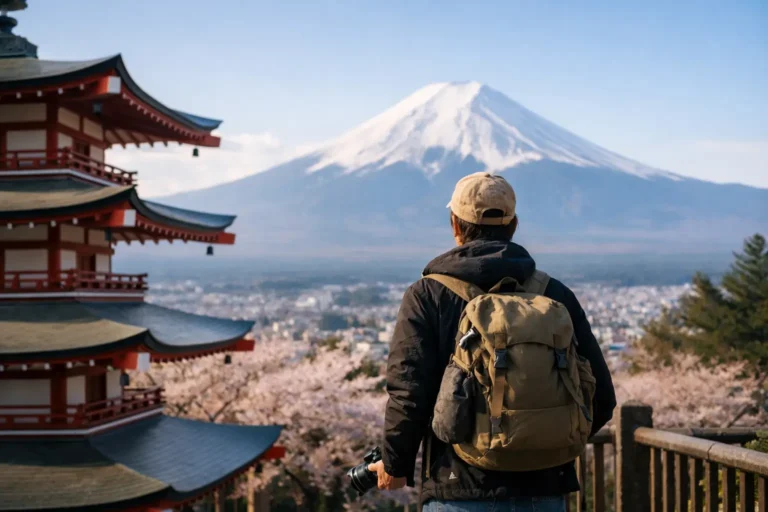
Use one or two day trips to widen the picture. Nikko gives you shrines and mountain scenery. Kamakura adds temples and a coastal feel. Hakone works if you want an onsen stay and, with luck, views of Fuji. You do not need all three. Pick the one that matches your pace.
Week 2: The Japanese Alps or central Honshu
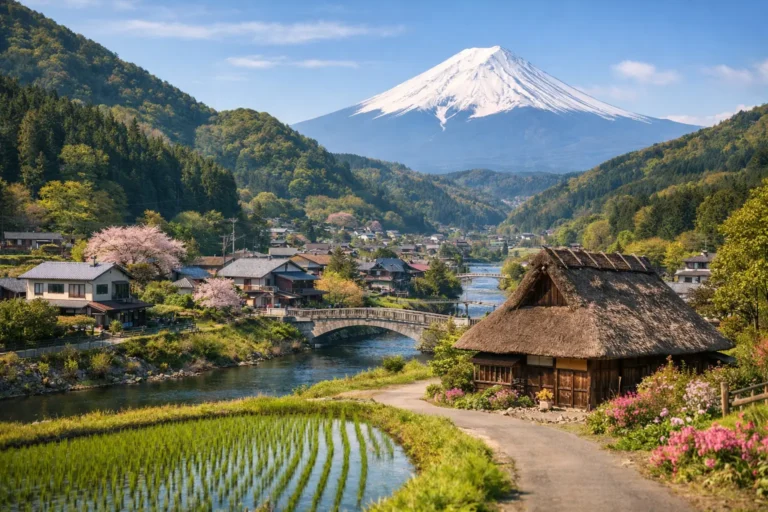
This is where a month becomes interesting. Instead of rushing straight to Kyoto, break the journey in the mountains. Matsumoto, Takayama, Kanazawa, Nagano, or the Kiso Valley all offer a different side of Japan – traditional streets, castle towns, hiking routes, ryokan stays, and a slower rhythm.
Takayama and Kanazawa make a strong pair if you want heritage without the scale of Kyoto. Nagano is a good base if you like alpine scenery and temple towns. The Kiso Valley is ideal if walking sections of the old Nakasendo trail appeals more than another city museum.
This week is also a good place to add one memorable ryokan or onsen night. It costs more than a business hotel, but for many travellers it becomes the most distinctly Japanese part of the month.
Week 3: Kyoto, Nara and Osaka
Give Kyoto at least four full days. Less than that and you will spend your time bouncing between crowded headline spots. More time lets you visit early, step into quieter districts, and enjoy the city when the day-trippers have gone.
Pair it with Nara for a day and Osaka for two or three days. Nara is easy and worth it for the historic core alone. Osaka is often underrated by travellers who treat it as a transport hub, but it is one of the best food cities in the country and has a more relaxed, street-level energy than Kyoto or Tokyo.
If you want to see the most of Japan in a month, this region should not be reduced to a rushed two-night stop. Kansai is where food culture, temple history, and urban life come together in a way that feels distinct from Kanto.
Week 4: Hiroshima and one wildcard region
Hiroshima deserves more than a quick stop for the Peace Memorial Museum. Stay at least two nights and include Miyajima, ideally with an overnight if your budget allows. Once the day crowds leave, the island feels completely different.
From here, your final wildcard depends on what kind of traveller you are. If you want more cities and food, continue into Fukuoka. If you want art and island scenery, consider Naoshima and the Seto Inland Sea. If nature is the priority, head towards Kyushu for volcanoes, hot springs, and a more regional pace.
This last week is the moment to personalise the trip. Not every month in Japan should look identical.
What to prioritise if it is your first trip
Japan offers almost too many good options, so priorities matter. For a first visit, aim for variety over completism. You want one giant city, one historic city, one rural or mountainous stretch, and one place that feels personally chosen rather than algorithm-approved.
That last category matters more than people admit. Maybe it is a ceramics town, a hiking trail, a baseball game, a remote onsen, or an overnight on an island. Those choices turn a standard route into your route.
If you love food, build around Osaka, Fukuoka, and regional markets rather than squeezing in another temple town. If you are drawn to nature, spend fewer nights in major cities and more time in the Alps, Kumano Kodo area, or Kyushu. If you are a culture-first traveller, Kyoto earns the time, but so do Kanazawa and smaller historic towns.
Trains, flights and the pacing question
Japan’s rail system is excellent, but that does not mean every long journey should be by train. For a month-long trip, mix transport types. Use the shinkansen for major city links where it is fast and simple. Consider a domestic flight if you are covering a long north-south jump and want to protect your time.
The Japan Rail Pass is no longer the automatic bargain it once was. Whether it saves money depends on your route. Price out your long-distance legs before buying anything. Regional rail passes can be better value if you are concentrating on one area.
Pacing matters more than transport geekery. Three-night stays are a sweet spot for many parts of Japan. Two nights can work in compact cities. One-night stops are best kept for special places such as an onsen ryokan or a mountain village, not as your default rhythm.
Where travellers lose time
The biggest time drains are not the major train rides. They are the small frictions around them. Packing and unpacking every day, navigating big stations with luggage, checking into hotels after dark, and trying to fit five districts into one afternoon all chip away at your month.
Build in buffer. After a longer transfer day, keep the evening open. When you arrive somewhere new, pick one neighbourhood and settle into it. Japan is full of places best appreciated at street level – a back-alley izakaya, a local sento, a river walk at dusk. Those moments disappear when every hour is scheduled.
Budgeting for a month in Japan
A month in Japan does not have to be ultra-luxury, but it also is not as cheap as many parts of South East Asia. Accommodation will shape the budget more than anything else. Business hotels are often excellent value, especially in cities. Ryokan stays are pricier, but worth planning for selectively.
Food can be surprisingly manageable. Convenience stores are genuinely useful, casual lunch sets are good value, and you do not need a special-occasion dinner every night. Transport adds up quickly, which is why route efficiency matters.
If you want the freedom of independent travel with less logistical friction, this is exactly where curated small-group travel can make sense. For some travellers, especially those who want deeper regional stops without spending weeks planning connections, it is the difference between a busy month and a well-shaped one.
The best mindset for a month in Japan
Treat Japan as a series of regions, not a checklist of famous names. You are not trying to conquer the country in thirty days. You are trying to experience enough contrast to understand why people return.
Leave room for repetition. Have two slow mornings in Kyoto. Revisit a Tokyo neighbourhood at night after seeing it in daylight. Book one extra night somewhere you suspect you will love. Seeing the most of Japan in a month is not about constant motion. It is about giving each stop enough space to become memorable.
If you plan the route with intention, keep your transfers sensible, and save space for one or two less obvious places, a month in Japan feels expansive rather than rushed. And that is usually when the trip stops feeling like an itinerary and starts feeling like an experience worth sharing.