Prosto kampiranje na Novi Zelandiji
Vse kar rabite vedeti
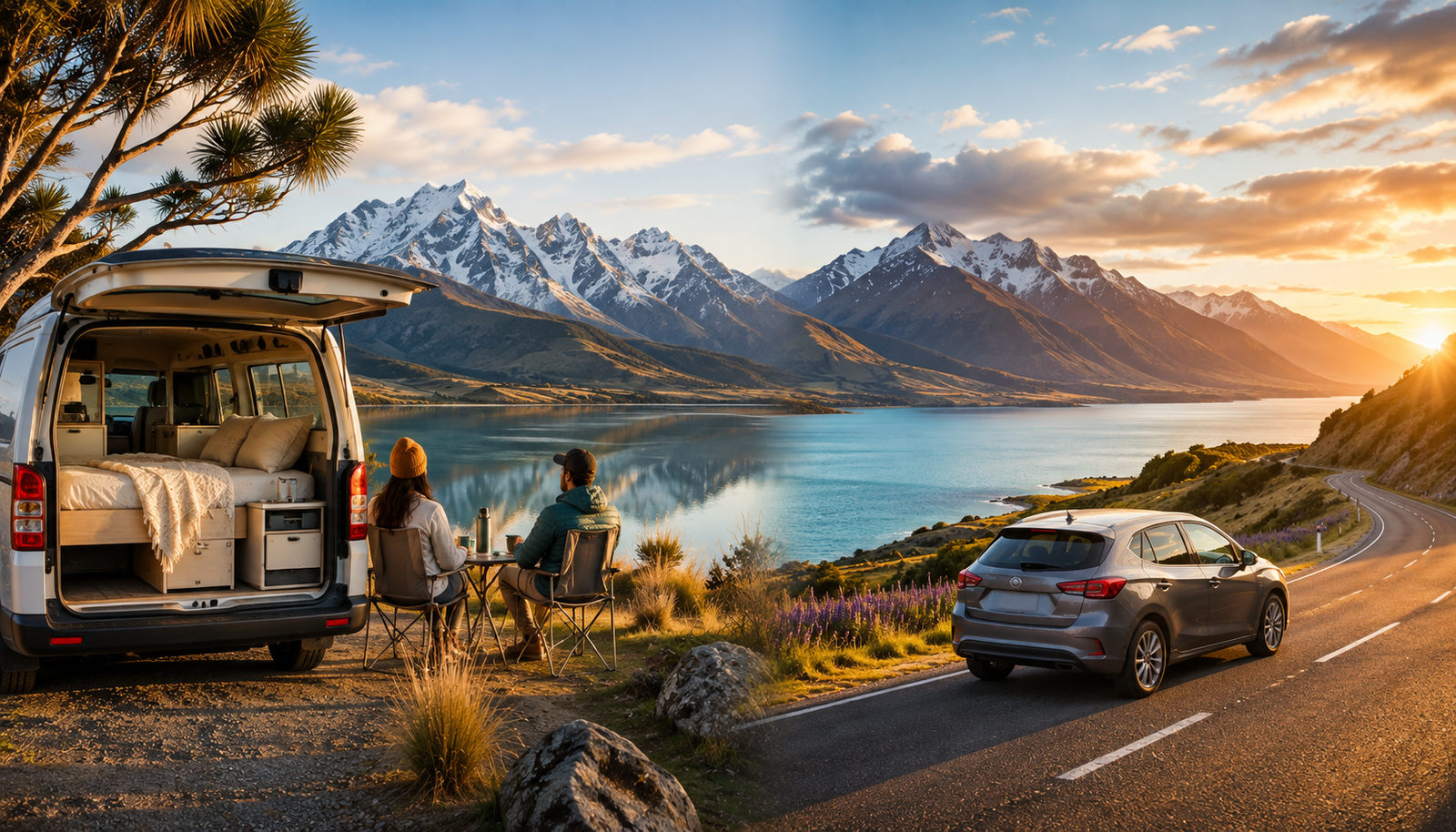
New Zealand is often described as one of the world’s greatest destinations for campervan travel. Vanlife is crazy popular here and for a good reason – the views, the freedom, the price-performance… a perfect cocktail of everything.
You’ll frequently hear wanderers say that “camping is free everywhere in New Zealand.” While there is some truth behind this reputation, the reality is a little more complicated.
Free camping is possible throughout much of the country, but there are important rules, restrictions, and vehicle requirements that every visitor should understand before setting off on their adventure.
Is Camping Really Free in New Zealand?
The short answer is: sometimes.
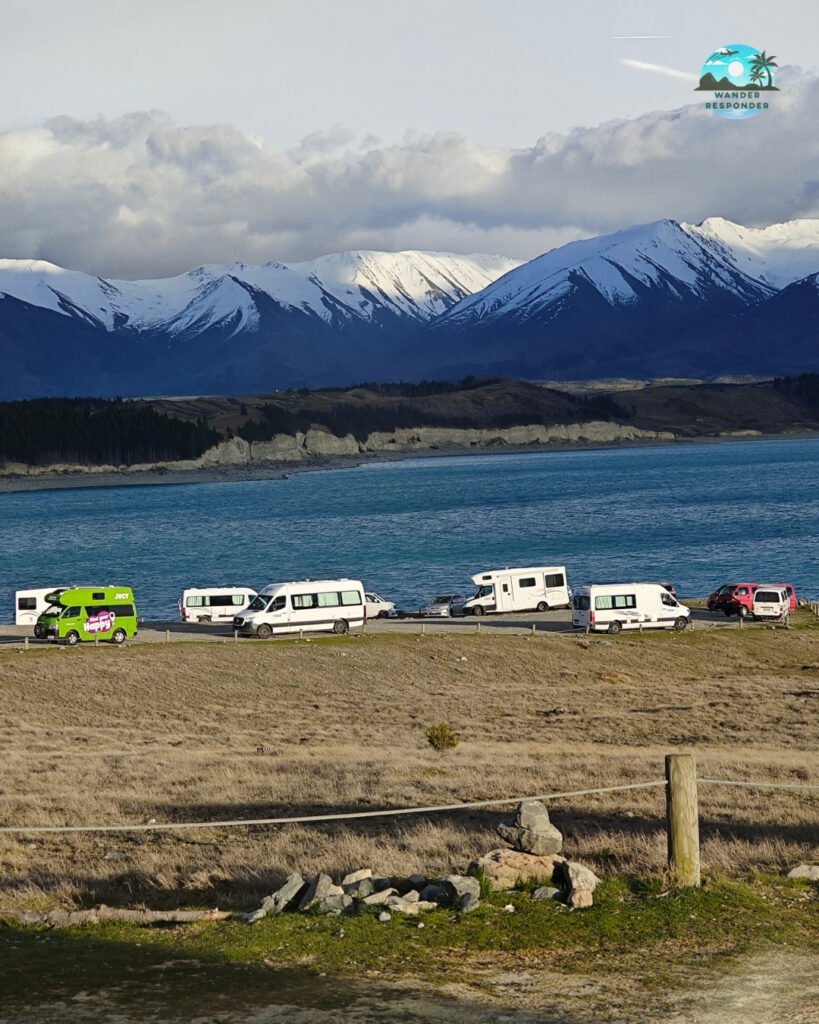
New Zealand allows a practice known as freedom camping, which means staying overnight on public land outside of commercial campgrounds. However, freedom camping is not permitted everywhere. Many towns and local councils have specific bylaws that restrict where visitors can stay overnight, and some areas prohibit freedom camping altogether.
The rules vary between regions, so it is important to check local regulations before parking for the night. Staying in an unauthorized area can result in significant fines.
That said, thousands of legal freedom camping spots exist across both the North and South Islands, making New Zealand one of the most camper-friendly countries in the world.
Self-Contained vs. Non-Self-Contained Vehicles
One of the most important concepts in New Zealand camping is the distinction between self-contained and non-self-contained vehicles.
Self-Contained Vehicles
A self-contained vehicle is designed to allow wanderers to live independently without relying on public facilities. These vehicles are equipped to store fresh water, collect wastewater, and provide toilet facilities inside a vehicle.
Since December 2024, New Zealand requires self-contained vehicles to have a fixed toilet permanently installed in order to receive certification. Prior to that you could just rent a porta-potty (small portable toilet) and keep it in your vehicle to be recognized as self-contained. That’s no longer the case.
Most campervans rented from major companies are self-contained and display a certification label showing that they meet New Zealand’s standards. Having a self-contained vehicle provides access to a massive number of freedom camping locations throughout the country.
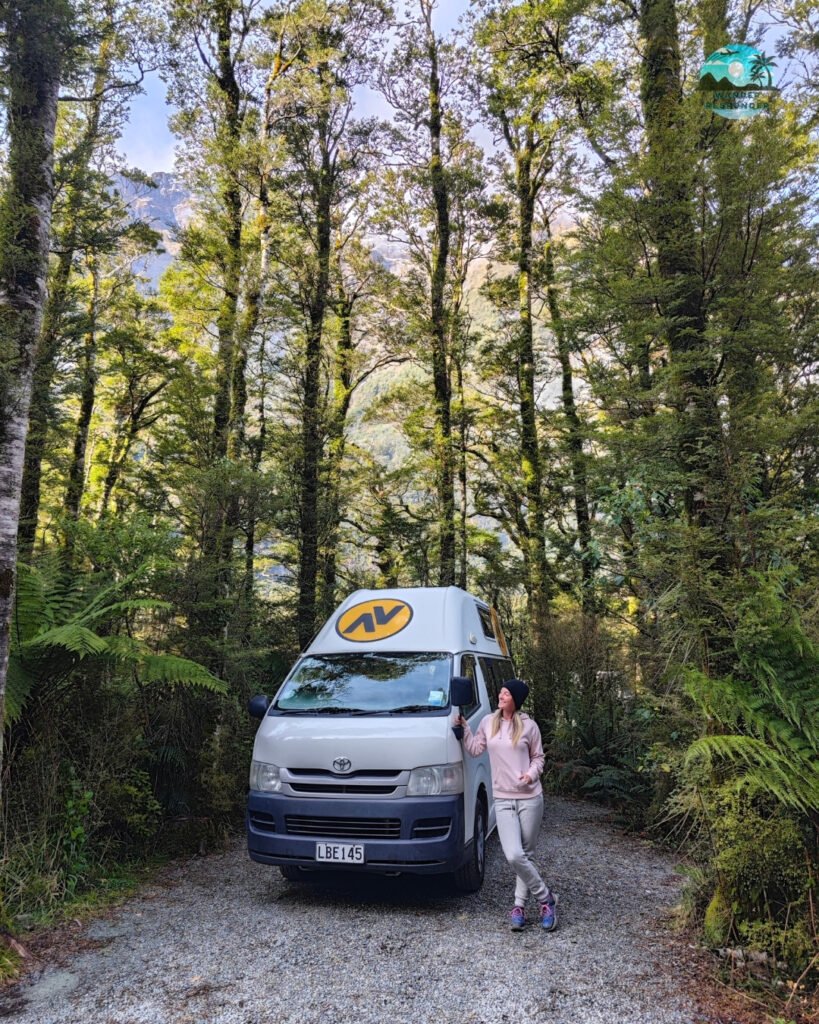
TIP: rent your campervan or motorhome from respectable companies only, like JUCY, Travellers Autobarn in Star RV. We tested all three and all have superb customer service – which you definitely want on a road-trip, where many things can happen. Their difference is in luxury and size.
Non-Self-Contained Vehicles
Non-self-contained vehicles do not meet the requirements for independent living. This category typically includes standard cars, station wagons, tents, roof-top tents, and campervans without certified toilet facilities.
Pozor! If your vehicle doesn’t have blue self-contained sticker, you’re not eligible to stay at free campgrounds. Your vehicle must have a built-in toilet and a waste water reservoir.
Travelers using non-self-contained vehicles have far fewer freedom camping options. Many council-operated camping areas and freedom camping sites are reserved exclusively for self-contained vehicles.
If you are travelling in a non-self-contained vehicle, you will often need to stay in commercial holiday parks, designated campgrounds, or specific council sites that permit non-self-contained camping.
TIP: find your vehicle on DiscoverCars.com – their prices can only be matched by their range of vehicles!
Helpful Apps for Finding Campsites
Because camping rules vary across the country, most wanderers rely on mobile apps to find legal places to stay.
Campermate
CamperMate is arguably the most popular camping app in New Zealand. Many travellers consider CamperMate an essential tool for planning a road trip. It provides detailed information about free camping locations, DOC campgrounds, holiday parks, public toilets, dump stations, water refill points, fuel stations, attractions and activities.
Rankers Camping NZ
Rankers offers one of the most comprehensive camping databases in New Zealand. Users can browse campsites, read reviews, check facilities, and view up-to-date information about camping regulations.
NZMCA App
Members of the New Zealand Motor Caravan Association (NZMCA) gain access to additional camping locations and facilities throughout the country. While primarily aimed at local motorhome owners, some international visitors also find it useful.
Google Maps
Although not specifically designed for campers, Google Maps remains useful for navigation and checking reviews, access roads, supermarkets, restaurants and other nearby services.
Department of Conservation (DOC) Campgrounds
The Department of Conservation (DOC) manages hundreds of campgrounds throughout New Zealand, often located in spectacular natural settings near beaches, lakes, mountains, and national parks.
Many visitors assume that DOC camps are free because they are government-operated. While some are indeed free, most charge a small fee (NZ$10–30) that helps fund maintenance and conservation efforts.
Pozor! There are many more DOC campgrounds on the South Island than there are on the North Island. North Island has them in more remote areas (Taranaki and similar), not many on the main route Auckland – Coromandel – Tauranga – Rotorua – Tongariro – Wellington.
DOC Pass
The New Zealand Department of Conservation (DOC) used to offer several campsite pass options, including a 1-week, 1-month and annual pass. When the DOC Campsite Pass launched in 2021, the 1-month pass cost NZ$80 per adult and the annual pass cost NZ$140 per adult.
Today, DOC has changed the system and generally offers a 365-day Campsite Pass instead. The current price is NZ$295 per adult, NZ$147.50 for children aged 5–17, and free for infants aged 0–4. The pass gives access to most DOC campsites across New Zealand, including many bookable and non-bookable campsites, although some popular sites, Great Walk campsites, powered sites, and certain peak-season campgrounds are excluded or require additional fees. Pass holders can stay up to 7 nights within a 30-day period at the same campsite, making the pass ideal for wanderers moving around the country rather than staying long-term in one location.
For wanderers who do not purchase a pass, DOC campsites are generally divided into several categories:
- Basic Campsites: These are the simplest DOC camps and usually provide only a (drop) toilet and a place to park or pitch a tent. Many basic camps are free, while others charge a small fee. If there’s water on site it’s usually not treated, therefore not suitable for drinking.
- Standard Campsites: Standard camps offer more facilities (toilets, sometimes even a shower, sink with water) and currently cost approximately NZ$10–15 per adult per night, depending on the location. If there’s water on site it’s usually not treated, therefore not suitable for drinking.
- Serviced Campsites: Serviced camps provide additional facilities such as flush toilets, hot showers, cooking shelters, or powered sites. Prices commonly range from NZ$15–25 per adult per night.
- Great Walk Campsites: These campgrounds are located along New Zealand’s famous Great Walks (Routeburn Track, Milford Track, Kepler Track, …). They generally require advance booking (WAY ADVANCE! Mostly they sell out within days or weeks of opening spots for next season) and are typically more expensive due to their popularity – from NZ$120 up.
TIP: if you’re interested in doing one of the Great Walks check DOC website for the date of opening slots for next season. In 2026 that was May (day different depending on Great Walk), in 2025 that was a year earlier etc. Be ready to book on the day when sales start.
Booking DOC Camps: Many DOC camps operate on a first-come, first-served basis, particularly in remote areas. Popular campsites, especially during summer, school holidays, and along Great Walk tracks, may require reservations through the DOC booking system. Checking availability in advance is highly recommended during peak travel periods. Such camps are not more expensive than usual; you just need to book your spot. Failing to do so may result into ranger waking you up at night and evicting you from the camp, or even fining you.
What Are New Zealand Campsites Like?
One of the pleasant surprises for many visitors is the quality of New Zealand’s public campsites.
Even basic camps are usually well maintained and regularly serviced.
Toilets
Most DOC and council-operated campsites provide free toilet facilities. Toilet paper is commonly supplied, although carrying a backup roll is always a good idea when wandering in remote areas.
Depending on the location, toilets may be:
- Modern flush toilets
- Composting toilets
- Traditional drop toilets (long-drop toilets) with no water flush
Facilities in remote areas can be simple, but they are generally clean and functional.
Water Supply
Fresh drinking water is not available at every campsite. Some campgrounds provide treated drinking water, while others have untreated water that should be boiled before use. Many free campsites do not have any water supply at all. For this reason, wanderers should always carry sufficient drinking water and refill whenever possible.
Other Faclities
Depending on the campsite, you may also find picnic tables, cooking shelters, barbecue areas, rubbish bins, boat ramps, walking tracks and beach access. However, many free camping sites offer only the basics, allowing visitors to enjoy New Zealand’s natural landscapes with minimal development.
So...
Freedom camping is one of the best ways to experience New Zealand’s incredible scenery while keeping travel costs low. However, successful camping requires understanding local rules, respecting the environment, and choosing the right vehicle.
A self-contained campervan will provide the greatest flexibility, while apps such as CamperMate and Rankers make it easy to find legal camping locations throughout the country.
Although camping is not completely free everywhere, New Zealand remains one of the world’s most accessible destinations for budget-friendly road trips, offering countless opportunities to wake up beside lakes, rivers, beaches, and mountains that would be difficult to match anywhere else.
Ali ste vedeli...
... z nakupi prek najinih povezav podpirate nastanek najine spletne strani brez dodatnih stroškov za vas. Hvala <3

Manca
Več objav o Novi Zelandiji
Na Novi Zelandiji je na voljo veliko pustolovskih aktivnosti, napisali pa smo tudi podrobne članke za vse epske stvari, ki jih lahko tam počnete. Več naših vodnikov si lahko ogledate s klikom na eno od spodnjih povezav.