Land in Tokyo too ambitious and you will spend half your holiday dragging a suitcase through stations. Too cautious and you will leave Japan feeling like you barely scratched the surface. A good Japan two-week itinerary example sits in the middle – fast enough to feel exciting, but paced well enough that you still have time for late-night ramen, temple mornings and the odd wrong turn that turns into a great memory.
For most travellers, two weeks is the sweet spot. It is long enough to combine Japan’s big hitters with one or two places that feel more personal, and short enough that route planning really matters. The best version is not the one with the most pins on a map. It is the one that groups places logically, limits hotel changes and leaves room for how you actually travel.
A Japan two-week itinerary example that works
This route is built for first-time visitors who want a strong mix of city energy, culture, food and scenery without turning the trip into a sprint. It runs Tokyo, Hakone, Kyoto, Nara, Osaka and Hiroshima with a Miyajima overnight if time and budget allow. That gives you iconic stops, but also a better rhythm than simply bouncing between Tokyo and Kyoto.
If you prefer nightlife and neighbourhood wandering, give Tokyo an extra night. If you care more about temples, gardens and traditional streets, shift that night to Kyoto. The point of a useful itinerary is not rigidity. It is knowing where the trade-offs sit before you book.
Days 1 to 4: Tokyo
Start with four nights in Tokyo. After a long-haul flight, this is not the moment to overcomplicate your plans. Staying put lets you adjust to the time difference and get comfortable with trains, payment apps and the general pace of things.
Use your first full day lightly. Pick one or two areas rather than trying to cover the whole city. Asakusa works well for a classic start, with Senso-ji and the older low-rise feel around it, then Ueno or Tokyo Skytree if you still have energy. On another day, pair Shibuya with Harajuku and Meiji Jingu. Then save one day for a more local-feeling mix such as Shimokitazawa, Kichijoji or Yanaka, depending on your interests.
Tokyo rewards curiosity more than checklist travel. Yes, the famous crossings, views and food halls are worth seeing, but some of the best hours come from stepping into a basement izakaya, a quiet shrine between tower blocks or a backstreet coffee shop with six seats. Keep one evening unplanned. You will use it.
Day 5: Hakone or a Fuji area stop
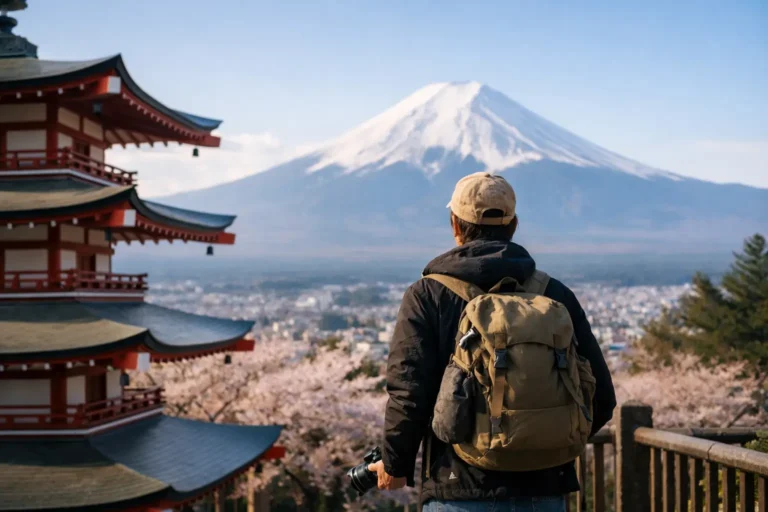
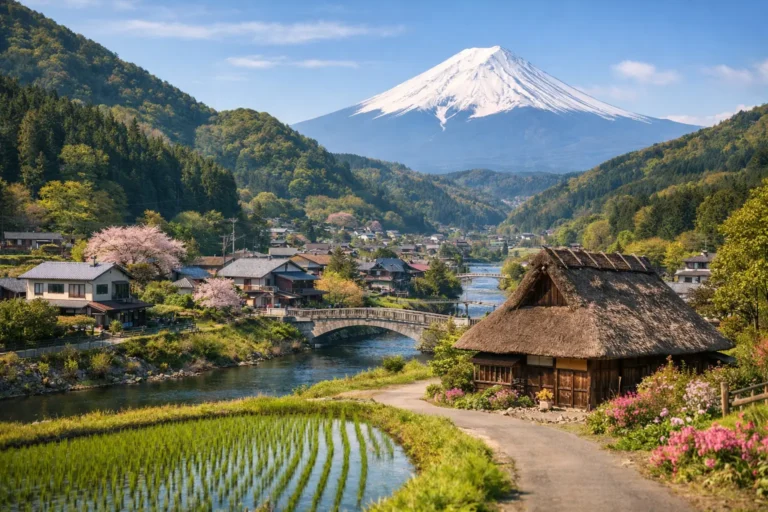
On day five, leave Tokyo for one night in Hakone. This break is useful because it changes the rhythm before you move on to Kansai. The draw here is not only Mount Fuji views – which depend heavily on weather – but also the chance to slow down in an onsen town.
Hakone is easy to fit into the route and offers decent transport connections onward. The downside is that it can feel busy and packaged, especially on classic sightseeing loops. If you want a quieter mountain stay and do not mind a bit more planning, consider Kawaguchiko instead. If Fuji visibility matters a lot to you, build flexibility into this section because no itinerary can beat a cloudy sky.
How this Japan two-week itinerary example balances pace
A common mistake is underestimating transfer days. Japan’s trains are brilliant, but station navigation, hotel check-in and luggage management still eat into the day. That is why this itinerary uses one-night stays sparingly.
Hakone is the main exception because it breaks the journey well. Everywhere else, you are staying long enough to settle in. That means better evenings, easier mornings and less of that constant unpack-repack cycle that makes a holiday feel oddly administrative.
Days 6 to 9: Kyoto with a day trip to Nara
Base yourself in Kyoto for four nights. From a planning perspective, Kyoto is best treated as a collection of districts rather than one walkable sightseeing area. Arashiyama, Higashiyama, central Kyoto and Fushimi all deserve their own chunks of time.
One day should go to eastern Kyoto. Start early around Kiyomizu-dera and work through the old lanes before the crowds build, then continue towards Kodai-ji, Yasaka Shrine and Gion. Another day can be for Arashiyama, ideally early in the morning before the bamboo grove turns into a one-way shuffle. Add Tenryu-ji, the river area or a quieter temple if you want more substance than the photo stop.
Use one of these Kyoto days for Nara as a day trip. It is easy, worthwhile and adds a different feel to the trip. Todai-ji is genuinely impressive, and while the deer are famous for a reason, the wider atmosphere is what makes the stop stick. Compared with Kyoto, Nara often feels less hurried.
Kyoto can be magical, but it can also be tiring if you stack too many temples back to back. Break things up with markets, tea houses, craft shops or a simple evening walk along the Kamo River. Culture lands better when you give it some breathing room.
Days 10 to 11: Osaka
Move to Osaka for two nights. You could day trip from Kyoto, but changing base lets you experience the city properly after dark, which is half the point. Osaka is less polished, more food-driven and often more immediately fun.
Spend one day around Osaka Castle, Nakanoshima or Umeda, then give the evening to Dotonbori and the surrounding lanes. Another day can be looser – Kuromon Market, Shinsekai, Den Den Town, or just eating your way through the city. Osaka suits travellers who like motion and character more than formal sightseeing.
If you are choosing between more time in Kyoto and more time in Osaka, ask yourself what you actually enjoy. Kyoto is stronger for traditional architecture, gardens and slower mornings. Osaka wins on street energy, casual eating and nightlife. Neither choice is wrong.
Days 12 to 13: Hiroshima and Miyajima
Head west to Hiroshima for two nights. Many people squeeze it into a day trip, but that often turns a meaningful place into a rushed exercise. Staying over gives you time for the Peace Memorial Park and Museum without clock-watching, and lets you add Miyajima at a better pace.
If possible, spend one of those nights on Miyajima rather than in the city. Once the day-trippers leave, the island shifts completely. The shrine, waterfront and mountain backdrop feel calmer, and the slower evening is a good counterweight to the previous city-heavy days.
This part of the itinerary adds historical depth and a change of scenery, but it does come with extra travel time and cost. If you would rather avoid that, keep the final section in Kansai and swap Hiroshima for another night in Kyoto plus a day trip to Himeji or Kobe.
Day 14: Return to Tokyo or fly onward from Kansai
Your final day depends on your flight. The smartest option is often an open-jaw ticket – into Tokyo, out of Osaka or vice versa. That saves backtracking and gives you more usable time on the ground.
If you must fly out of Tokyo, return the day before if your international flight is early. It is not the glamorous choice, but missed flights are less romantic in real life than they sound in travel stories. Practical wins here.
Planning tips that make the route easier
Book hotels near major stations, but not necessarily right beside the busiest exits. Five to ten minutes away often means a quieter area and better value. In Tokyo, neighbourhood fit matters as much as transport. In Kyoto, being near a train or underground line helps, but bus access still matters depending on your plans.
Pack lighter than you think you need. Japan is one of the easiest countries in the world for convenience, and hauling oversized luggage through stair-heavy stations gets old quickly. Luggage forwarding can be a very good investment on this route, especially when moving between Tokyo, Hakone and Kyoto.
Rail passes are no longer automatic value for every traveller. Price out your long-distance legs first instead of assuming a pass will save money. For many two-week trips, buying individual tickets makes more sense, particularly if your route is concentrated.
Season also changes the feel of this itinerary. Spring brings cherry blossoms and heavy crowds. Autumn has excellent foliage and a slightly calmer atmosphere, though major spots still get busy. Summer is greener and festival-rich but can be hot and humid. Winter offers crisp days, fewer crowds in some cities and better odds for clear Fuji views, but shorter daylight hours.
A strong two-week Japan trip is rarely about doing everything. It is about choosing a route with enough contrast to feel rewarding and enough slack to feel human. Leave a few blanks in the schedule, trust the train network, and let the trip develop a bit once you are there. That is usually when Japan gets really good.